
Fraunhofer LBF develops Evaluation Methodology for Fatigue of additively manufactured Components
CAE News |
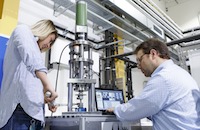 In production engineering, additive manufacturing of metallic structures is regarded as a highly flexible and innovative method that opens the way to new design approaches. However, the method can hardly be used for cyclically loaded components and connections due to lack of design standards.
Reliable Simulation of Polyurethane Foam
CAE News |
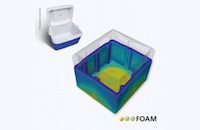 Car seats and insulation material often consist of polyurethane foams. The foaming process of the liquid polymer emulsions is complex. The Fraunhofer ITWM can now simulate the foaming behavior and reliably characterize the material. This also works with composites that combine plastic foams with textile structures.
ANSYS and Granta Design collaborate in additive Manufacturing Simulation
CAE News |

Read more … ANSYS and Granta Design collaborate in additive Manufacturing Simulation
Fraunhofer LBF develops digital Twin of a Test Bench
CAE News |
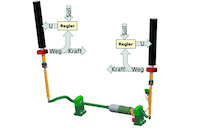
Read more … Fraunhofer LBF develops digital Twin of a Test Bench
Survey identifies current, critical Challenges of automotive CAE
CAE News |
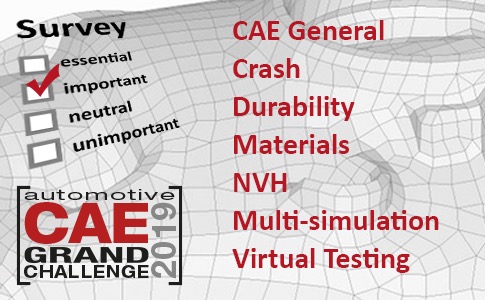
Read more … Survey identifies current, critical Challenges of automotive CAE
Niclas Trube from Fraunhofer EMI receives the Young Scientist Award of the Human Modeling Symposium
CAE News |
Predict Magnetic Material Properties with MagnetPredictor
CAE News |
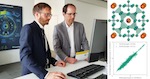 Materials scientists have been researching for years to replace rare-earth metals in materials for permanent magnets. The "trial and error" path is common: which elemental compounds worked well in the past and could work similarly well? To try this out is a complex task.
Read more … Predict Magnetic Material Properties with MagnetPredictor
Digitalized Fatigue Resistance Data save Development Time
CAE News |
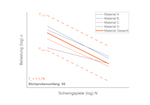 When developing new plastic products, it is very valuable to be able to fall back on existing information. In view of shorter development cycles, material databases are becoming increasingly important.
 Read more … Digitalized Fatigue Resistance Data save Development Time
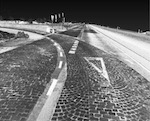 The British software specialist rFpro is developing a high-precision virtual model of the Applus+ IDIADA test area to be used for the development of vehicles by means of simulation.