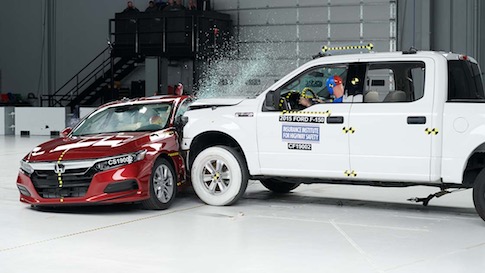
 The Insurance Institute for Highway Safety's side crash test has led to lifesaving improvements in occupant protection since it was introduced in 2003. There's just one problem: The program has been so successful that the current side ratings no longer help consumers distinguish among vehicles or point the way toward further improvements. A new side impact loadcase with a higher impact speed and a heavier, more realistic movable barrier is expected to be launched next year.
Image: IIHS read more ...
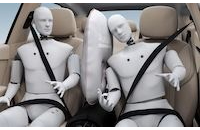 Autoliv develops a new front center airbag that is designed to save lives in (far-side) side-impact crash situations. The new Autoliv Front Center Airbag helps avoid driver-to-interior and driver-to-passenger impact. The inboard seat mounted airbag deploys in the space between the driver and the front-seat passenger, providing protection for them from colliding during a side impact and reduces risk of trauma to head, shoulder and chest. Autoliv develops a new front center airbag that is designed to save lives in (far-side) side-impact crash situations. The new Autoliv Front Center Airbag helps avoid driver-to-interior and driver-to-passenger impact. The inboard seat mounted airbag deploys in the space between the driver and the front-seat passenger, providing protection for them from colliding during a side impact and reduces risk of trauma to head, shoulder and chest.
Image: Autoliv
read more ...  The National Transportation Safety Board calls upon federal regulators to create a review process before allowing automated test vehicles to operate on public roads, based upon the agency’s investigation of a fatal collision between an Uber automated test vehicle and a pedestrian in Tempe, Arizona, USA. The National Transportation Safety Board calls upon federal regulators to create a review process before allowing automated test vehicles to operate on public roads, based upon the agency’s investigation of a fatal collision between an Uber automated test vehicle and a pedestrian in Tempe, Arizona, USA.
Image: NTSB
read more ... 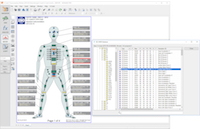 With X-Crash ATD, certification tests of crash test dummies are evaluated according to standards at the push of a button. The highlights of the newly available program version 7 are evaluations for children's dummies of the P series, the integration of the ISO-MME database and the conversion to 64 bit. With X-Crash ATD, certification tests of crash test dummies are evaluated according to standards at the push of a button. The highlights of the newly available program version 7 are evaluations for children's dummies of the P series, the integration of the ISO-MME database and the conversion to 64 bit.
Image: measX
read more ... 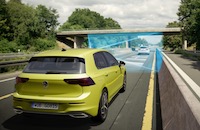 Innovations in Assisted Driving, connectivity and safety dominate the list of nominations for the 2020 What Car? Technology Award, sponsored by Thatcham Research. The ten nominees, selected by a panel of experts from What Car? and Thatcham Research, now move to the final stage of judging. The winner will be announced on 14 January 2020 at the What Car? Car of the Year Awards. Innovations in Assisted Driving, connectivity and safety dominate the list of nominations for the 2020 What Car? Technology Award, sponsored by Thatcham Research. The ten nominees, selected by a panel of experts from What Car? and Thatcham Research, now move to the final stage of judging. The winner will be announced on 14 January 2020 at the What Car? Car of the Year Awards.
Image: Thatcham Research
read more ... 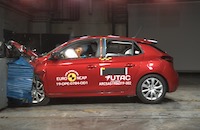 Euro NCAP releases the safety ratings of four new vehicles. Two compact SUVs, the Mercedes-Benz's GLB and the Mazda's CX-30, and the larger Ford Explorer HYBRID have joined the ranks of five stars vehicles published this year. Opel/Vauxhall’s supermini, the Corsa, earned four stars. Euro NCAP releases the safety ratings of four new vehicles. Two compact SUVs, the Mercedes-Benz's GLB and the Mazda's CX-30, and the larger Ford Explorer HYBRID have joined the ranks of five stars vehicles published this year. Opel/Vauxhall’s supermini, the Corsa, earned four stars.
Image: Euro NCAP
read more ...  Claire Baker (Imperial College London, UK) writes in Concussion Zone about how on-board car sensors could be utilized to reduce the effect of head trauma. Her work is a multi-disciplinary research collaboration between Imperial College London and TRL that seeks to truly advance ways of diagnosing traumatic brain injuries (TBIs) caused during road traffic collisions. Claire Baker (Imperial College London, UK) writes in Concussion Zone about how on-board car sensors could be utilized to reduce the effect of head trauma. Her work is a multi-disciplinary research collaboration between Imperial College London and TRL that seeks to truly advance ways of diagnosing traumatic brain injuries (TBIs) caused during road traffic collisions.
Image: TRL
read more ... 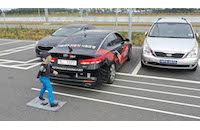 Hyundai Mobis develops a new rear-autonomous emergency braking (R-AEB) technology using ultra short-range radar (USRR) for the first time in the world. The new technology is expected to greatly contribute to prevent unexpected backover crashes since it responds faster has wider detection range than conventional ultrasound sensors. Hyundai Mobis develops a new rear-autonomous emergency braking (R-AEB) technology using ultra short-range radar (USRR) for the first time in the world. The new technology is expected to greatly contribute to prevent unexpected backover crashes since it responds faster has wider detection range than conventional ultrasound sensors.
Image Hyundai Mobis
read more ... 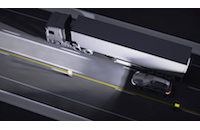 With the new high-resolution lighting system "Digital Light SSL | HD", the lighting and electronics expert HELLA is making a further significant contribution to greater safety and comfort in road traffic. With this lighting technology, more than 30,000 pixels can be controlled intelligently and individually, thus bringing about numerous new safety functions like optical lane markings. With the new high-resolution lighting system "Digital Light SSL | HD", the lighting and electronics expert HELLA is making a further significant contribution to greater safety and comfort in road traffic. With this lighting technology, more than 30,000 pixels can be controlled intelligently and individually, thus bringing about numerous new safety functions like optical lane markings.
Image: HELLA
read more ... 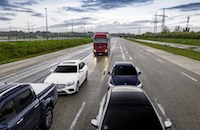 In November 2019, the Mercedes-Benz Trucks Safety Dialogue was held, where experts from politics and business, and from Dekra Accident Research and the Allgemeiner Deutscher Fahrrad-Club e. V. (General Bicycle Association of Germany) discussed innovative solutions for further improving road safety in the context of trucks for all road users. In November 2019, the Mercedes-Benz Trucks Safety Dialogue was held, where experts from politics and business, and from Dekra Accident Research and the Allgemeiner Deutscher Fahrrad-Club e. V. (General Bicycle Association of Germany) discussed innovative solutions for further improving road safety in the context of trucks for all road users.
Image: Daimler
read more ... 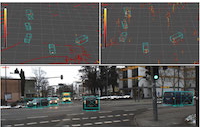 In the AuRoRaS project (Automotive Robust Radar Sensing), three partners from research and technology are working on improving the measurement quality of high-resolution radar sensors. As part of the funding program KMU-innovativ of the Federal Ministry of Education and Research (BMBF), new simulation methods and methods of artificial intelligence are to be developed in order to make radar systems more efficient and autonomous driving safer. In the AuRoRaS project (Automotive Robust Radar Sensing), three partners from research and technology are working on improving the measurement quality of high-resolution radar sensors. As part of the funding program KMU-innovativ of the Federal Ministry of Education and Research (BMBF), new simulation methods and methods of artificial intelligence are to be developed in order to make radar systems more efficient and autonomous driving safer.
Image: DFKI
read more ... 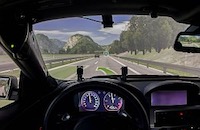 Autonomous driving can enhance safety and comfort in road traffic, although there will still be situations in the medium term, in which humans will react better than the machine. Identifying such situations, passing control from the vehicle to the driver in an anticipatory and reliable way, and developing an automated vehicle that adapts to the needs of the driver were the goals of the PAKoS project coordinated by Karlsruhe Institute of Technology (KIT). Autonomous driving can enhance safety and comfort in road traffic, although there will still be situations in the medium term, in which humans will react better than the machine. Identifying such situations, passing control from the vehicle to the driver in an anticipatory and reliable way, and developing an automated vehicle that adapts to the needs of the driver were the goals of the PAKoS project coordinated by Karlsruhe Institute of Technology (KIT).
Image: KTI
read more ...  As of mid-2022, all new cars put on the EU market will have to be equipped with advanced safety systems. Following an agreement with the European Parliament last March, the Council adopted a regulation on the general safety of motor vehicles and the protection of vehicle occupants and vulnerable road users in a bid to significantly reduce the number of road casualties. As of mid-2022, all new cars put on the EU market will have to be equipped with advanced safety systems. Following an agreement with the European Parliament last March, the Council adopted a regulation on the general safety of motor vehicles and the protection of vehicle occupants and vulnerable road users in a bid to significantly reduce the number of road casualties.
read more ...
Register now! carhs.training seminars and events for automotive safety.
All seminars are available as in-house trainings in both German and English!
Please find the full list of seminars at our website.
|




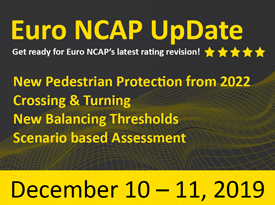






 10.12.2019 - 11.12.2019 in Frankfurt am Main
 19.12.2019 in Alzenau

 The Governors Highway Safety Association releases