 The launch of the Decade of Action for Road Safety 2021-2030 sets the ambitious target of preventing at least 50% of road traffic deaths and injuries by 2030. To realize this vision, UNECE partnered with WHO and its sister UN Regional Commissions to develop a Global Plan for the Decade of Action.
Image: UNECE read more ...  Understanding the conditions of road crashes supports the assessment of how vehicles’ safety equipment performs, which can help to improve these systems to reinforce safety on the road. A new UN Regulation which entered into force on 30 September 2021 will introduce a major breakthrough in information gathering about road crashes with the introduction of Event Data Recorders (EDR) aboard vehicles. Understanding the conditions of road crashes supports the assessment of how vehicles’ safety equipment performs, which can help to improve these systems to reinforce safety on the road. A new UN Regulation which entered into force on 30 September 2021 will introduce a major breakthrough in information gathering about road crashes with the introduction of Event Data Recorders (EDR) aboard vehicles.
Image: UNECE
read more ... 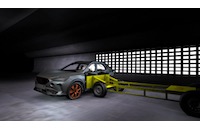 SEAT S.A. and ESI Group, a global player in virtual prototyping for industries, partner in leveraging advanced simulation technologies to lead SEAT s global digital transformation. In line with the industry s clean, safe and productive objective, the companies achieve best-in-class results: accelerated technological innovation while unlocking significant efficiency gains in new car development and reducing material costs. SEAT S.A. and ESI Group, a global player in virtual prototyping for industries, partner in leveraging advanced simulation technologies to lead SEAT s global digital transformation. In line with the industry s clean, safe and productive objective, the companies achieve best-in-class results: accelerated technological innovation while unlocking significant efficiency gains in new car development and reducing material costs.
Image: ESI
read more ... 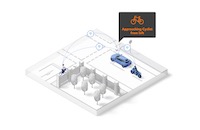 NXP Semiconductors showcases new safety scenarios enabled by vehicle-to-vehicle communication (Vehicle-to-X or V2X). NXP will work together with partners such as premium manufacturer Riese & Müller, to highlight better protection for vulnerable road users, new V2X application scenarios designed to help prevent traffic accidents and e-bike safety demonstrations. NXP's V2X technology is based on 802.11p, a communication standard also known as DSRC (Dedicated Short-Range Communication). Optimized for automobiles, 802.11p allows vehicles, road infrastructure and other road users to exchange information in real time. NXP Semiconductors showcases new safety scenarios enabled by vehicle-to-vehicle communication (Vehicle-to-X or V2X). NXP will work together with partners such as premium manufacturer Riese & Müller, to highlight better protection for vulnerable road users, new V2X application scenarios designed to help prevent traffic accidents and e-bike safety demonstrations. NXP's V2X technology is based on 802.11p, a communication standard also known as DSRC (Dedicated Short-Range Communication). Optimized for automobiles, 802.11p allows vehicles, road infrastructure and other road users to exchange information in real time.
Image: NXP Semiconductors
read more ...  NI and Foretellix announced a strategic collaboration to enhance the safety and reliability of advanced driver-assistance systems (ADAS) and autonomous vehicles (AVs). Together, the companies will deliver new integrated solutions to help engineers get high-quality autonomous driving systems to market faster and at lower development costs, while seamlessly integrating test data and tools across the software verification and validation workflow. NI and Foretellix announced a strategic collaboration to enhance the safety and reliability of advanced driver-assistance systems (ADAS) and autonomous vehicles (AVs). Together, the companies will deliver new integrated solutions to help engineers get high-quality autonomous driving systems to market faster and at lower development costs, while seamlessly integrating test data and tools across the software verification and validation workflow.
Image: NI
read more ...  LG Electronics announced that its innovative Advanced Driving Assistance System (ADAS) camera module is available in the new 2021 Mercedes-Benz C-Class now rolling out in markets around the world. LG s ADAS leverages the latest in automotive technology and works in tandem with Mercedes-Benz AG s precise engineering to keep the driver and passengers of the new C-Class safer. LG Electronics announced that its innovative Advanced Driving Assistance System (ADAS) camera module is available in the new 2021 Mercedes-Benz C-Class now rolling out in markets around the world. LG s ADAS leverages the latest in automotive technology and works in tandem with Mercedes-Benz AG s precise engineering to keep the driver and passengers of the new C-Class safer.
Image: LG Electronics
read more ...  Canoo and AVL announced their partnership to develop, test and validate Advanced Driver Assistance Systems (ADAS) feature software for Canoo s Lifestyle Vehicle. With the goal of using technology to help keep drivers and occupants safe and alert, the challenge is to design an intuitive human-first interface that provides vehicles feedback to drivers enabling them to make safe choices on the road while reducing distractions. Canoo and AVL announced their partnership to develop, test and validate Advanced Driver Assistance Systems (ADAS) feature software for Canoo s Lifestyle Vehicle. With the goal of using technology to help keep drivers and occupants safe and alert, the challenge is to design an intuitive human-first interface that provides vehicles feedback to drivers enabling them to make safe choices on the road while reducing distractions.
Image: AVL
read more ...  The aim of the ATTENTION project is to develop a method for predicting injuries to vulnerable road users (VRU) such as pedestrians or cyclists in real time. With the help of data-driven procedures and digital human models, video data from vehicles and virtual tests are used to determine a situation-specific risk of injury. In the future, injury prediction could help to ensure safe and efficient transport thanks to risk minimization strategies for automated vehicles. The aim of the ATTENTION project is to develop a method for predicting injuries to vulnerable road users (VRU) such as pedestrians or cyclists in real time. With the help of data-driven procedures and digital human models, video data from vehicles and virtual tests are used to determine a situation-specific risk of injury. In the future, injury prediction could help to ensure safe and efficient transport thanks to risk minimization strategies for automated vehicles.
Image: Fraunhofer EMI
read more ... 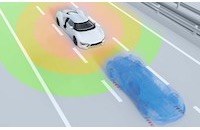 In the new research project ICON "LOPAAS" (Layers of Protection Architecture for Autonomous Systems), Fraunhofer IESE, together with Fraunhofer IKS and the University of York in England, is developing an approach to safeguard autonomous systems and especially autonomous vehicles with the Assuring Autonomy International Program (AAIP). In the new research project ICON "LOPAAS" (Layers of Protection Architecture for Autonomous Systems), Fraunhofer IESE, together with Fraunhofer IKS and the University of York in England, is developing an approach to safeguard autonomous systems and especially autonomous vehicles with the Assuring Autonomy International Program (AAIP).
Image: Fraunhofer IESE
read more ... 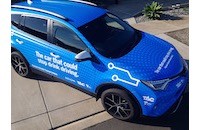 The Victorian Government has unveiled state-of-the-art road safety technology that could one day make it impossible for people to drink and drive. In an Australian-first, the Victorian Government will conduct research on a prototype vehicle fitted with passive alcohol sensor (PAS) technology that can automatically analyses a driver s breath for alcohol. The Transport Accident Commission in partnership with the Driver Alcohol Detection System for Safety (DADSS) Research Program, from the US, has brought the technology to Victoria to develop plans for a fleet trial. The Victorian Government has unveiled state-of-the-art road safety technology that could one day make it impossible for people to drink and drive. In an Australian-first, the Victorian Government will conduct research on a prototype vehicle fitted with passive alcohol sensor (PAS) technology that can automatically analyses a driver s breath for alcohol. The Transport Accident Commission in partnership with the Driver Alcohol Detection System for Safety (DADSS) Research Program, from the US, has brought the technology to Victoria to develop plans for a fleet trial.
Image: TAC
read more ...
Register now! carhs.training seminars and events for automotive safety.
All seminars are available as in-house trainings in both German and English!
Please find the full list of seminars at our website.
|












 23.11.2021 - 24.11.2021 in Alzenau
 01.12.2021 - 02.12.2021 in Alzenau